Informational article. This content does not replace medical, agricultural, nautical or other professional advice. Lunar data is approximate.
What is the relationship between the phases of the moon and human emotions?
Since time immemorial, humanity has observed a profound connection between the heavens and human behavior. The influence of the moon's phases on our emotions is not just a popular belief rooted in various cultures, but a phenomenon that many experience tangibly in their daily lives. The human body is largely composed of water, and if the moon's gravitational force is capable of moving vast ocean masses, creating tides, it is natural to consider that it can also exert an effect on our own biology and psychological states.
Studying this relationship invites us to view the lunar calendar not only as an astronomical or agricultural tool, but also as a map for navigating our inner world. The moon's cycles reflect the cycles of our own lives. Understanding the moon's phase allows us to anticipate moments of greater introspection, peaks of energy, or periods when emotional sensitivity may be heightened. This synchronization with natural rhythms is a form of self-care that helps reduce stress and better understand why we feel more optimistic or, conversely, more vulnerable on certain days.
The new moon and the renewal of the inner world
The new moon marks the beginning of the cycle, a time when the satellite is positioned between the Earth and the Sun, showing its dark side. Psychologically, this phase represents fertile emptiness, silence, and the seed yet to sprout. During these days, it's common to experience a sense of introspection. Many people report lower physical energy, which encourages rest and deep reflection. It's the ideal time to look inward and assess which aspects of our emotional life need a fresh start.
In terms of mental well-being, the new moon is the phase for planting intentions. With less external light, attention shifts inward. It's an excellent time to begin therapeutic processes, start a gratitude journal, or simply dedicate time to meditation. The calm that usually accompanies this phase allows thoughts to become clear, away from the noise and agitation of the brighter moon. If you feel quieter or crave solitude during these days, you're likely resonating with the energy of renewal of this phase.
The waxing crescent moon and the impulse towards action
As the moon begins to show a small sliver of light, we enter the waxing crescent phase. This phase is characterized by a gradual increase in vitality. Emotionally, we tend to feel more inclined toward social interaction and the execution of projects. It is a period of building, where self-confidence is often strengthened. However, this increase in energy can also manifest as anxiety or impatience if we don't find appropriate channels to channel that impulse.
Emotional well-being during the waxing moon depends on our ability to manage growth. It's a time to face challenges and overcome obstacles that arose during the previous phase. The mind becomes more analytical and results-oriented. It's advisable to take advantage of this energy flow to engage in physical activity, organize work meetings, or make progress on tasks that require extra effort. Maintaining a balance between action and rest is key to avoiding burnout before reaching the cycle's peak.
The full moon and the intensity of emotional processes
The full moon is undoubtedly the phase best known for its impact on human behavior. When the satellite reflects all of the sunlight, a peak of energy occurs, affecting both nature and the psyche. During a full moon, emotions tend to be amplified; what was hidden comes to light, and feelings are experienced with overwhelming intensity. People often feel more euphoric, but also more irritable or sensitive.
This phenomenon of emotional "enlightenment" can be both positive and challenging. On the one hand, creativity reaches its peak, and the ability to connect with others becomes very powerful. On the other hand, a lack of emotional control can lead to conflicts or impulsive decisions. Consulting the lunar calendar allows us to be prepared for these days of high tension. It's a time for celebration, but also for practicing patience and self-management, avoiding overreacting to external stimuli.
The waning moon and the need to let go
After the full moon's explosion, the light begins to wane, entering the waning crescent phase. This phase is synonymous with release and cleansing. Emotionally, it's a time to let go of what no longer serves us: grudges, harmful habits, or limiting thoughts. The energy becomes softer and more reflective, inviting us to conclude processes rather than begin new ones. It's a stage of closure that prepares the ground for the next cycle.
Mental well-being during this phase is enhanced by cleansing activities. It's an excellent time to cleanse the home, finish pending tasks, or practice emotional detachment. Many people find relief in expressing their feelings of sadness or frustration during these days, as the waning energy facilitates the process of letting go. It's a phase of emotional maturity where we integrate the experiences of the lunar month and prepare for the rest that the next new moon will bring.
Why the full moon disrupts sleep and mood
One of the most documented effects of the full moon is its influence on sleep patterns. Various studies suggest that during the days surrounding the full moon, people take longer to fall asleep and the quality of deep sleep decreases. This is due, in part, to the increased nighttime light, which can interfere with the production of melatonin, the hormone responsible for regulating sleep-wake cycles. Poor sleep has a direct impact on mood, increasing irritability, fatigue, and difficulty concentrating.
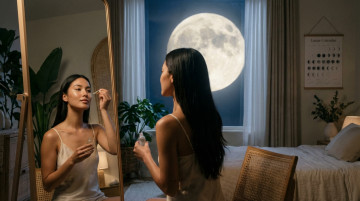
In addition to the light factor, there is a theory about biological micro-tides. If the moon affects ocean water, it may also influence bodily fluids and the central nervous system. This subtle pressure could alter brain neurochemistry, exacerbating pre-existing conditions of anxiety or hyperactivity. Therefore, during a full moon, it is crucial to reinforce good sleep hygiene routines, such as avoiding screens before bed, keeping the bedroom completely dark, and practicing relaxation techniques to counteract the ambient agitation.
The lunar calendar as a guide to mental health and balance
Using the lunar calendar as an emotional management tool allows us to live more consciously and less reactively. By knowing the lunar phases in advance, we can plan our schedule according to our energy levels. For example, if we know a full moon is approaching, we can avoid scheduling important discussions or events that require a lot of calm. Similarly, we can reserve the days of the new moon for rest and strategic planning.
Identifying recurring emotional patterns
Tracking our emotions in relation to the lunar cycle helps us identify patterns. Many people discover that their anxiety attacks or moments of heightened clarity consistently coincide with certain phases. This self-awareness is empowering, as it allows us to stop blaming ourselves for feeling bad for no apparent reason and begin to understand that we are part of a larger system with its own rhythms. Accepting our cyclical nature is a fundamental step toward robust mental health.
Self-care practices adapted to each phase
Each lunar phase suggests a different type of self-care. During the waxing phases, the focus should be on nutrition, exercise, and expansion. During the waning phases, self-care centers on detoxification, silence, and introspection. Adapting our diet, physical activity levels, and social interactions to these rhythms not only improves our mental well-being but also optimizes our overall performance and vitality.
Scientific perspective on human behavior and lunar cycles
Although modern science has been cautious in confirming a direct cause-and-effect relationship between the moon and human behavior, there are some interesting studies that cannot be ignored. Chronobiology, the science that studies biological rhythms, has found evidence that many living organisms possess internal clocks synchronized with lunar cycles. In humans, although these rhythms are often masked by artificial light and modern lifestyles, they persist in a latent form.
Some psychiatrists have observed that certain mood disorders, such as bipolar disorder, can exhibit cyclical patterns that coincide with lunar phases in some patients. Similarly, statistics from emergency services and mental health centers often show peaks in activity during full moon nights. While it cannot be said that the moon 'causes' madness, it does seem to act as a catalyst for processes already present in the individual, intensifying the emotional response to the environment.
How to prepare for the energetic changes of the lunar cycle
To minimize the negative effects and enhance the benefits of the lunar influence, it's advisable to adopt habits that keep us grounded. Grounding, walking barefoot on the grass, or spending time in nature are excellent practices for balancing the excess electromagnetic energy that can be felt during the full moon. Likewise, maintaining adequate hydration is vital, since water is the element that resonates most with lunar energy.
Healthy eating and habits according to the moon
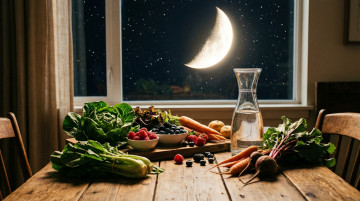
During the waxing moon, the body tends to absorb and store more nutrients, making it a good time to eat foods rich in vitamins and minerals. Conversely, during the waning moon, the body is in elimination mode, which facilitates cleansing diets and the expulsion of toxins. Listening to these biological signals helps maintain a stable weight and a strong immune system, which directly impacts our emotional stability and mental clarity.
The importance of natural light and darkness
For our endocrine system to function correctly in harmony with the moon, it's important to expose ourselves to natural light during the day and ensure total darkness at night. Excessive use of artificial light confuses our pineal gland, disconnecting us from the rhythms of the lunar calendar . Reconnecting visually with the night sky and observing the waxing and waning of the moon helps us resynchronize our biological clock, promoting a deeper and more lasting sense of well-being.